

In this easy to follow blog and video, I will show you how to express your dog’s anal glands at home, safely and easily, using the external method gently without causing your dog pain or injury. If you are wondering how to drain a dogs anal glands, keep reading.
No need for a trip to the vet. We show you how to empty your dog’s anal sacs at home. I was taught this method by a vet, so it is a veterinary approved method for a full anal gland problem. It is what is known as the external method, as opposed to the internal method, which can be slightly trickier and more invasive.
We answer questions such as:
- Why does my dog smell of fish?
- Why does my dog scoot on the floor?
- What are anal glands?
- Where are the anal sacs located?
- Do all dogs need their anal glands expressed?
- How to express a dog’s anal glands at home
With the agreement of your veterinarian, you can definitely empty your dog’s scent glands yourself, at home. We show you where to locate them, the position of the sac openings on the dogs anus and how to gently milk (not squeeze) the sacs so that they drain easily and without causing your dog pain. We also show what you will see, how you will know when the glands are empty and how often expression should be done.
Video showing how to empty your dog’s anal glands
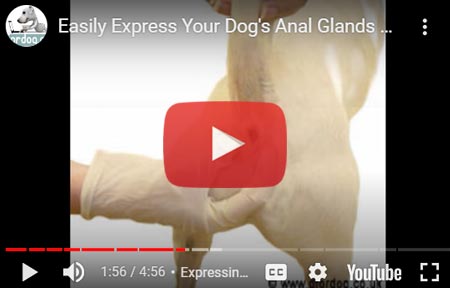
What are anal glands?
A dog’s anal glands are situated either side of their bottom (anal opening). The fluid inside has a potent smell that is unique to your dog so it is great for marking territory and giving lots of personal information to other dogs. Most dogs never have an issue and will never need their glands emptying but if your dog scoots their bum along the floor or smells a bit fishy, they may have an issue with full or impacted anal glands.
Do all dogs need their anal glands expressed?
No, most dogs do not need to have their scent glands emptied manually. For most dogs the sacs will function normally. Dogs naturally empty a small amount of anal gland material each time they have a bowel movement. But sometimes they do not empty naturally or do not empty enough and this can lead to the glands filling up and becoming uncomfortable, leaking at inconvenient times or even becoming impacted or the dog suffering with infected anal glands.
Routine gland emptying at the groomers
Many dog groomers routinely express anal glands as part of their standard grooming services but this is not advisable unless there is a specific reason for the groomer to do this to your dog.
As we already mentioned, under normal circumstances most dogs are able to empty their anal glands naturally. Routine manual expression, when not required, may lead to irritation, inflammation, or even dependency on manual emptying. Unnecessary manipulation of the anal glands should be avoided to prevent potential complications.
If your groomer routinely performs anal gland expression as part of their dog grooming service, ask them not to unless your vet has identified a medical necessity.
What dog breeds need their glands expressed?
It doesn’t seem to be a specific breed issue but smaller dogs like the Cocker Spaniel, Chihuahuas, Beagles, Miniature Poodles etc… do seem to have more of a tendency towards anal sac disease and issues like full or an impacted anal gland.
What causes dog anal glands to fill?
A dog’s diet may lead to anal sacs that do not empty on their own. During a bowel movement, a large firm stool will usually trigger the release naturally. A small or soft stool may not activate the anal sacs and if this continues the sacs will continue to fill up. Sometimes the dog’s poop may be the perfect firmness but the dog still suffers with full or anal gland impaction. You can also cause issues if you empty them for a dog who didn’t need it doing. If your dog doesn’t have an issue in this area, leave well alone.
How do you know if your dog’s glands need emptying?
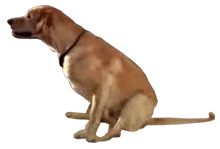
A dog with full or anal gland problems may scoot their bottom along the floor, scratch, bite or lick at their bottom or tail, have a fishy smell at the back end, seem in pain or depressed, object to anyone going near their back end.
- Drag their bottom along the floor (scoot)
- Try to scratch, lick or bite at their bottom (or even other areas of their body like their feet)
- Smell fishy from their bottom (or breath, if they have been licking their behind)
- Wag their tail less
- Seem depressed
- Object to their tail being lifted or handled
Big indications of anal gland issues are scooting and the fishy smell. The fishy smell occurs if the anal glands have gotten too full and they start leaking at times other than when the dog is toileting. Anal gland fluid has a very potent rotten fish smell. Full anal glands can leak when the dog is at rest, sleeping or is picked up.
There is a common misconception that a dog will drag their bottom along the floor when they have worms. In reality, it is most likely to be because of full anal sacs. Your dog is trying to release the fluid and relieve the discomfort. The strong fishy smell is coming from anal glands that are full but leaking some fluid. You may smell it on your soft furnishings or actually coming from your dogs bottom.
If you notice these things it could be that your dog has an anal sac issue and/or your dog’s anal glands are not emptying correctly on their own. If it just happens occasionally then that is quite normal and no cause for concern. Your dog only needs help if the problem becomes frequent.
Who should empty them?
Always get the advice of a veterinarian first, to check that the problem is anal sacs and that there is no infection.
If it is an infrequent problem or you do not fancy trying to empty them yourself, your vet or your local dog groomer can help. It is a relatively simple 5 minute procedure. Alternatively, you can do anal sac expression yourself, with a little patience and know-how. But for the first time it is best to visit your vet so they can check your dog first. Once infections or other issues are ruled out, your veterinarian will usually agree that in future you, the dog owner, can empty them at home. A good vet will be happy to give you some instructions on how to do this.
Can I empty my dog’s anal sacs at home?
Yes, with a little practice, patience and gentleness. The key is to relax (you and the dog, lol) and to take it slowly. Do not rush or panic or go at it with too much vigour. Be gentle and patient.
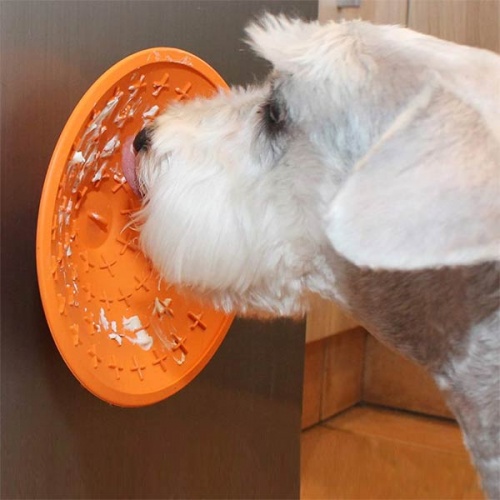
It isn’t really a one person job though, unless your dog is likely to stand still and let you do this. It is easier if you have another person gently holding and reassuring the dog while the other person works at the action end. However, if another person isn’t handy to help, buy a lick mat. These are the perfect way to keep your dog busy and engaged and less likely to walk away. They are great for jobs like this and also to use at bath time, during grooming, for nail cutting and more. Woof! Our favourite is the LickiMat Splash Dog Lick Pad. These are similar to the lick mats you may have seen before but LickiMat Splash is an innovative curved shape to keep the licking contained inside the lick pad, so that means less mess and less licking of your floors or walls, lol.
Can a dog express their own glands?
Absolutely. In fact that is how the anal glands should work. They should empty a little at a time when the dog passes a stool. So dog’s should naturally empty their own anal glands, if everything is working as it should. Human intervention is only needed when the anal glands don’t empty naturally.
Where are a dog’s anal sacs?
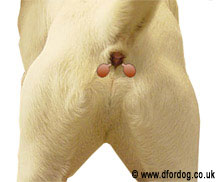
To help you successfully express the anal glands you need to be aware of where they are and where they drain from. The image shows where the anal glands are situated and where the openings are. They are at about 5 o’clock and 7 o’clock, as shown. The all important openings are above each sac, pointing inwards, towards the dog’s anus. This is where the fluid will drain from.
What will I need?
You will need a latex glove (a household rubber glove is alright to use but they are less sensitive for you to be able to feel through), some paper towel and preferably another person to help.
Does it hurt a dog to express glands?
If you do it gently and correctly it should not hurt but it may be slightly uncomfortable for your dog. They may wonder what you are doing back there but the relief afterwards will make up for any discomfort.
How to express a dog’s anal glands?
We are going to use the external method. Stand your dog on a safe, easy to clean surface. Have the other person gently hold your dog still in a standing position so your dog doesn’t walk off or sit down. But try not to frighten or panic your dog. Ensure they are relaxed. This makes the dog less likely to squirm or clench their bottom.
You must be as level with the dog’s bottom as you can and try to be a comfortable position yourself. Do not sit or crouch in a way that is going to be uncomfortable for you after a few minutes.
Emptying a dog’s anal glands is easy once you get used to it but, especially to begin with, it can take time and patience. I prefer the external method for emptying the anal sacs. It is easier to do and less intrusive for your dog. You can also do both sacs at the same time. Result!
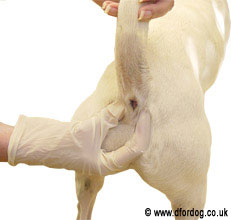
Here’s how to do it…
Gently hold your dog’s tail up and out of the way. With your gloved hand, place two fingers (thumb and forefinger) either side of and slightly below your dog’s bottom (see second image).
Full anal glands will feel like two large peas. Sometimes only one sac will be full rather than both. This can indicate that the glands were generally emptying OK on their own but for some reason one has become impacted and maybe also infected. A course of antibiotics and some pain relief may be required. Seek advice from your vet.
How do I squeeze a dog’s anal glands?
Never squeeze the anal glands. This is a mistake so many people make. A gentle motion is all that is needed. Once you can feel the anal glands, gently milk them in a slightly inwards and upwards motion. Review the first image again so you can see exactly where the anal glands open. That is the direction to milk the sacs. Do not squeeze or apply too much pressure. The key here is to gently milk them.
When expressing dog anal glands, what will I see?
As you are milking, watch your dog’s bottom. If nothing comes out, adjust your fingers slightly and adjust the angle of the ‘milking’ and try again. Be patient and keep trying a few times until you see a drip of fluid escape. You can now keep your fingers in that position and continue to milk the glands in and up until they are emptied. Sometimes it can squirt out and take you by surprise. Try to take it in your stride. Don’t scare your dog.
The anal gland material usually smells strongly of fish and can be anything from a clear or white smooth consistency to more of a brown grainy substance. Don’t be worried by this. The colour and consistency of the anal fluid can vary from dog to dog and also from expression to expression. Unhealthy looking fluid would be pussy or green. Seek the advice of your veterinarian if this is the case.
How do I know when the anal glands are empty?
You will know when you are finished because the sacs will feel deflated and the fluid will stop coming out. Gently wipe your dog’s bottom to remove any dribbled fluids and give them a nice treat. Good boy (or girl)!
However, if after a few tries you are unsuccessful, stop and try again another day. Repeated milking of the glands can cause pain and bruising. This can make the problem even worse. If you still do not have success please ask your vet for advice.
The internal method
Another method of anal sac expression, often used by vets, is to insert one lubricated gloved finger gently into your dog’s bottom to feel the sac and empty them one at a time. This is the internal method. I find it more intrusive for the dog and trickier to do so I always use the external method.
How often should I express my dog’s anal glands?
Sometimes the glands only need to be drained once in their lifetime and they will have no further issues. However, some dogs have ongoing issues with their anal sacs not emptying naturally. If a few weeks later you see some of the signs mentioned above (scooting, fishy smells etc..) then the glands have probably filled up again.
If your dog has an ongoing issue, it is best to schedule a reminder to check your dog’s anal glands regularly and empty them whenever they feel full. How often this needs doing will vary from dog to dog but scheduling a remind for once a month is a good starting point and go from there.
I can’t say this enough – please only empty your dog’s anal glands if it is necessary. Anal gland expression is not something that should be done routinely just because someone can. I have heard of some groomers for example doing anal gland draining as part of the ear cleaning and nail cutting routine. Messing about with a dog’s anal glands for no real reason can actually cause problems. Let your dog’s own body do it’s job where possible.
Removal of anal glands
This operation can be performed in certain circumstances but due to complications it is not recommended as a general solution. Faecal incontinence is a recognised side effect of anal gland surgery. Be really sure that the issue can’t be managed another way before considering this option. For more information and case studies, see the medical library Anal Sac Removal, Elective by DVSC.
Other solutions
As mentioned above, check your dog’s stools for size and firmness and adjust their diet to a high residue (cereal based) diet if the stools are too small or soft. You could try adding bran to firm up the stools and bulk them out. A couple of teaspoons a day for a medium sized dog should suffice. Reduce your dog’s weight if he is overweight. These solutions aim to aid natural anal gland emptying.
Want more?
Why not check out some of our other popular dog blog and/or subscribe to our newsletter. It is packed full of useful information, shiny new things and special offers. We make it easy for you to keep up to date. Woof!
Or if you fancy a bit of doggie shopping, check out our online dog product shop, from great gift ideas to toys and accessories. We are one of the UK’s leading pet supply stores so you are always in great hands at D for Dog.
If you are looking for dog care and grooming products, check out our range here Dog Care & Grooming which includes cooling coats and mats, pet towels and drying coats, sun vests, paw balms and everything you need for pooch care and pampering.
By Jenny Prevel
© D for Dog www.dfordog.co.uk
This article belongs strictly to D for Dog and we do not authorise the copying of all or any part of it.
Last update: 7th May 2019